Custom Platforms: When Off-the-Shelf Tools Stop Working
Outgrowing Shopify? Duct-taping five SaaS tools together? Here's when building a custom platform makes financial sense.
There's a tipping point every growing business hits. The tools that worked when you had ten customers start breaking at a hundred. The spreadsheet that tracked inventory becomes a liability. The five different SaaS subscriptions that were supposed to simplify your workflow now create more work than they save. That's when custom platform development enters the conversation.
What Counts as a Custom Platform
A custom platform is software built specifically for your business operations. It could be a client portal where customers access their project status, invoices, and communications in one place. It could be an internal dashboard that pulls data from your CRM, analytics, and billing into a single view. It could be a booking and scheduling system tailored to your specific service model.
The defining characteristic is that it's built around your workflow, not the other way around.
When Custom Makes Financial Sense
Custom development is an investment. For it to make sense, at least one of these should be true: you're paying for multiple tools that poorly overlap, your team spends hours on manual data entry between systems, your clients are frustrated by a disjointed experience, or your competitive advantage depends on a process that no existing tool supports.
Calculate what you're currently spending, not just on subscriptions, but on the labor hours lost to workarounds, the revenue lost to slow response times, and the client relationships strained by clunky experiences. Custom platforms often pay for themselves within twelve months.
Architecture Decisions That Matter
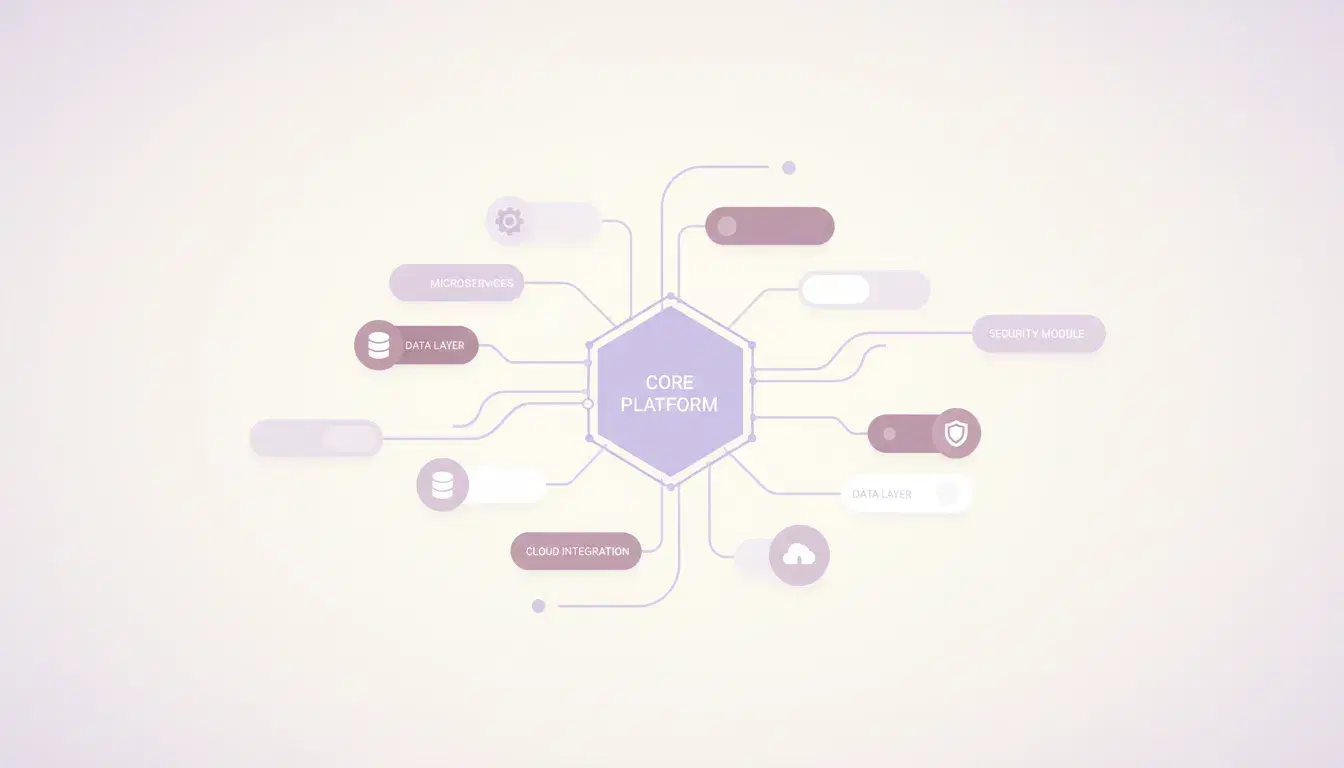
The technology choices you make at the start determine how maintainable, scalable, and cost-effective your platform will be for years. A few principles that consistently matter: use proven frameworks with active communities (so you can find developers to maintain it), design a clean API layer (so different parts of the system can evolve independently), invest in a solid database schema (because restructuring data later is expensive), and build monitoring and logging from day one (because you can't fix problems you can't see).
The Phased Approach
The biggest risk in custom platform development is trying to build everything at once. The most successful projects we've worked on followed a phased approach: build the core workflow first, launch it to a small group, gather feedback, then expand. Each phase delivers usable value while reducing the risk of building something nobody actually needs.
Phase one might take four to six weeks. That's enough to validate the concept and start generating ROI before committing to the full vision.
Maintenance Is Part of the Deal
A custom platform isn't a project with an end date. It's a product that evolves with your business. Budget for ongoing maintenance, security updates, and feature development. The businesses that get the most value from custom platforms treat them as living tools, not one-time builds.
The Bottom Line
Custom platforms are the right choice when your growth has outpaced the tools built for smaller operations. The key is starting with a clear problem, building in phases, choosing technology that scales, and planning for long-term maintenance. Done right, a custom platform becomes your competitive moat, something no off-the-shelf tool can replicate.

Yousef
Founder & CEO
Founder of SpiderWeb with over a decade of experience in web development and digital strategy for small and mid-sized businesses.
More about SpiderWeb →